Have We Become So Lazy That We Need a Fridge Telling Us What To Buy?
Walk through any appliance showroom and you will find refrigerators with touchscreens and cameras inside. Washing machines that order their own detergent. Ovens you can preheat from your phone. Air fryers with companion apps. Coffee makers that connect to Wi-Fi. Televisions that know what you watch, when you watch it, and on which streaming service.
The question that the showroom does not encourage you to ask is a simple one: does this appliance genuinely need to be connected to the internet to perform its function? A refrigerator keeps food cold. A washing machine cleans clothes. A dryer dries them. An oven cooks. These functions require no network connection. The connectivity has been added not because it makes the appliance work better at its core job — but because it creates an opportunity to collect data about how you use it.
The average connected household in the United States in 2025 had more than 17 internet-connected devices. Many of those devices are appliances and household items that have been connected to the internet within the last decade — not because consumers demanded it, but because connectivity was added as a feature and marketed as an upgrade. Understanding what those devices collect, what happens to that data, and what the risks are is the foundation of making informed purchasing and usage decisions going forward.
What Smart Appliances Actually Collect
The data collected by smart appliances varies by device but follows a consistent pattern: manufacturers collect far more than is necessary for the device to function, and the data collected reveals far more about your life than you would expect a kitchen appliance or laundry machine to know.
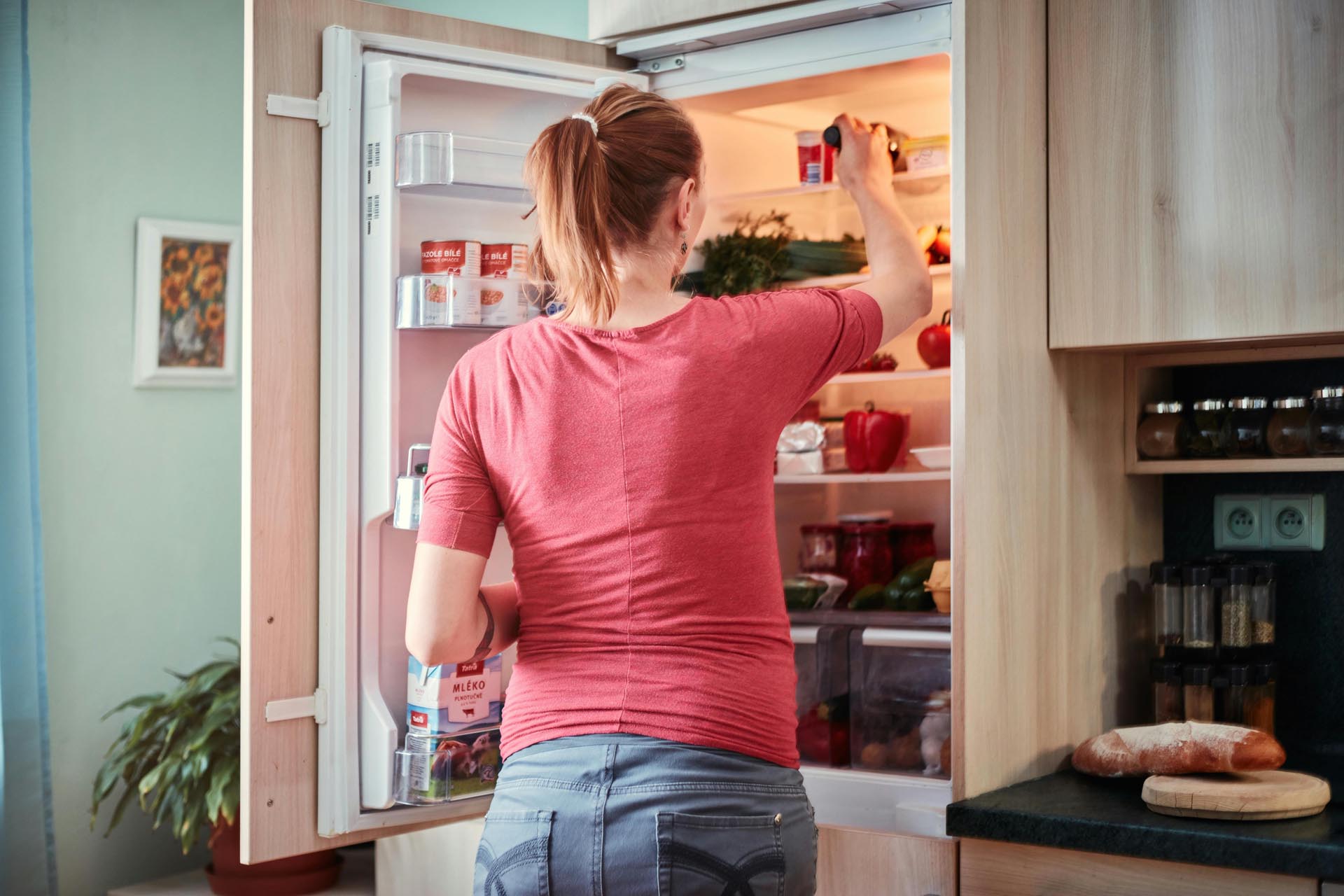
A smart refrigerator can track what food you keep, how frequently you open it, the times of day you access it, your shopping patterns, and in models with internal cameras, a visual record of the contents. This data reveals your dietary habits, your household size, your daily routine, and your financial situation — information that, aggregated with data from other sources, contributes to the detailed consumer profiles held by data brokers and used for commercial targeting.
A smart washing machine tracks how often you do laundry, what cycles you use, and when. A smart thermostat tracks when you are home, when you leave, when you sleep, and your temperature preferences. A smart TV tracks every channel you watch, every streaming service you use, every title you view and for how long — this data category, called Automatic Content Recognition, is sold to advertising companies and is standard practice across virtually all major smart TV manufacturers.
In December 2024, the British consumer organization Which? published research finding that several popular air fryer brands — including models from Xiaomi and Aigostar — were requesting access to users’ audio recordings for no apparent functional reason. The same report found that smart TVs from Hisense and Samsung requested zip code information and access to other apps on users’ phones during setup. The UK’s Information Commissioner’s Office noted that consumers were effectively paying twice — first with money and then with their personal data.
When your air fryer requests microphone access, the question is not whether the manufacturer has a plausible explanation. The question is whether you need an air fryer with a microphone at all — and whether the answer was ever actually yes.
The Security Risk of Devices That Never Get Updates
Beyond the data collection question lies a security risk that Consumer Reports has highlighted as a growing concern: smart appliances create network vulnerabilities that persist long after the device is no longer supported by the manufacturer.
A smartphone receives security updates for several years after purchase. A laptop is updated regularly. A smart washing machine or connected refrigerator may receive firmware updates for two or three years after release — after which the manufacturer stops supporting it, security vulnerabilities accumulate without patches, and the device remains on your home network, potentially for another decade.
Unlike a phone you replace every few years, a washing machine or dishwasher might remain in use for fifteen years. The software running it will stop receiving security updates long before the hardware stops working. At that point the appliance is a connected device with known, unpatched vulnerabilities sitting permanently on your home network — a potential entry point for anyone who knows those vulnerabilities exist.
In early 2025, Mars Hydro — a manufacturer of smart LED grow lights — suffered a breach that exposed approximately 2.7 billion records due to misconfigured cloud storage. The breach affected smart home users globally and exposed sensitive personal information linked to their devices. The device in question was a grow light — not a security system, not a camera, not a device anyone would instinctively think of as a privacy risk. But it was connected to the internet, its data was stored in the cloud, and when the cloud was misconfigured, everything was exposed.
The Smart TV Problem — ACR and Continuous Viewing Surveillance
Smart TVs deserve specific attention because they are in almost every home and because the data they collect is both extensive and almost entirely unknown to most users.
Automatic Content Recognition — ACR — is a technology built into virtually all smart TVs that identifies what you are watching by capturing samples of the on-screen content and matching them against a database. It does not matter whether you are watching streaming, cable, a DVD, or content from a USB drive. If the content matches something in the database, the TV reports what you watched, for how long, at what time of day, and on what date.
This data is collected continuously, stored, and sold to advertisers and data brokers. Your television watching habits — every channel, every show, every film — become part of your consumer profile and are used to target advertising both on the TV itself and across other platforms and devices.
ACR is enabled by default on most smart TVs. Disabling it requires navigating into settings menus that vary by manufacturer — Samsung calls it Viewing Information Services, LG calls it LivePlus, Vizio calls it Viewing Data — and actively turning it off. Most people have never been told it exists.
What You Can Do
The connected appliance landscape is large but manageable with a few consistent principles.
Turn off ACR on your smart TV immediately. This is the highest-impact single action for most households. Search for your TV manufacturer and “disable ACR” or “disable viewing data” — the steps vary by brand but the setting exists on all major manufacturers. Do this before doing anything else on this list.
Ask whether connectivity adds real value before buying. Before purchasing any connected appliance, ask whether the Wi-Fi functionality provides something you will genuinely use that justifies the privacy tradeoff. A smart fridge that lets you check its contents remotely is a marginal convenience. A washing machine that orders detergent is a marginal convenience. The data those features enable the manufacturer to collect is not marginal at all.
Do not connect appliances you do not need to connect. Many smart appliances function perfectly well without being connected to the internet. A smart TV works as a TV without being on your Wi-Fi network. A smart washing machine washes clothes without a network connection. If you do not need the connected features, do not connect the device.
Put smart appliances on a separate network. As with other IoT devices, placing smart appliances on a guest network rather than your main network limits the damage if a device is compromised. Your computers and phones remain protected even if an appliance is exploited.
Review and revoke unnecessary app permissions. The companion apps for smart appliances frequently request permissions — microphone access, location, access to other apps — that have no relationship to the appliance’s function. Review permissions for every smart home app on your phone and revoke anything that cannot be justified by what the app is supposed to do.
Check whether older devices are still receiving updates. If you have smart appliances that are several years old, check whether the manufacturer is still issuing firmware updates. A device that is no longer supported is a security liability. Consider whether leaving it connected to your network is worth the risk.
Connectivity is a feature. Like all features it has a cost. For smart appliances that cost is not always visible at the point of purchase — it accumulates over time, in data collected about your habits, your household, and your daily life. Knowing that cost exists is the beginning of deciding whether it is one you are willing to pay.
Your refrigerator does not need to be online to keep your food cold. Your washing machine does not need to be online to clean your clothes. The question worth asking — before the purchase, before the setup, before the first app download — is what exactly you are getting in exchange for connecting them. And whether that exchange was ever really in your favor.
·
Logic Base