There Is a Microphone in Your Living Room and It Never Sleeps.
Somewhere in your home — possibly in multiple rooms — there is a device with a microphone that is always on. It is listening right now. It has been listening since the day you plugged it in. And the audio it captures does not stay in your house.
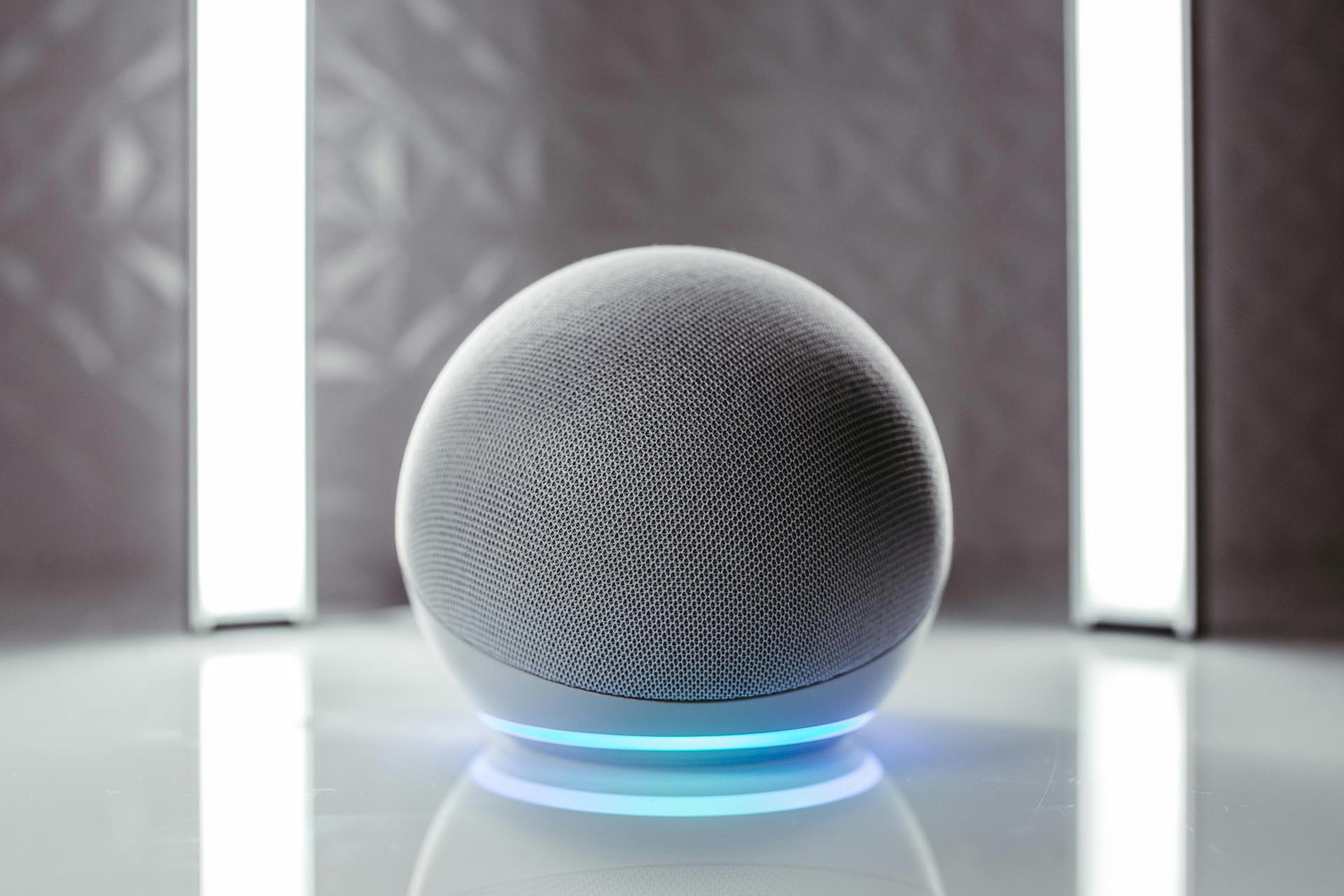
Smart speakers and voice assistants — Amazon Echo with Alexa, Google Nest with Google Assistant, Apple HomePod with Siri — have become fixtures in tens of millions of homes. Approximately 35 percent of the US population owns at least one. They are convenient, genuinely useful, and represent one of the most significant voluntary surveillance decisions most people have ever made without realizing it.
Always Listening — What That Actually Means
The standard explanation from manufacturers is reassuring: the device listens for its wake word — Alexa, Hey Google, Hey Siri — and only begins recording and transmitting audio after that word is detected. Everything before the wake word stays local. Nothing is sent to the cloud unless you deliberately trigger it.
This explanation is technically accurate and practically misleading.
For a device to detect a wake word, its microphone must be active and processing audio continuously. There is no other way for it to work. The device is not dormant and waiting — it is actively analyzing every sound in the room, every moment, comparing it against the pattern of its wake word. The distinction between listening and recording is real but narrower than it sounds. The microphone is on. The processing is happening. The only question is what gets transmitted.
A device that is always listening for a specific word is, by definition, always listening. The wake word is a trigger, not a privacy protection.
False Activations Are Not Rare
Researchers at Northeastern University studied smart speaker activations and found that devices can accidentally activate up to 19 times per day from sounds and speech patterns that were never intended as wake words. Some activations lasted up to 43 seconds. The same study identified over 1,000 word combinations that could falsely trigger Alexa — including common words like “unacceptable” and “election.”
What this means in practice is that conversations happening in your home — conversations you never intended to be captured — are periodically being recorded and transmitted to cloud servers. Not because someone is deliberately eavesdropping, but because the pattern-matching system that decides what is and is not a wake word is imperfect.
In 2018, an Amazon Echo in Portland recorded a private conversation between a husband and wife and sent it to a random contact in the husband’s phone without any deliberate activation. Amazon acknowledged the incident and attributed it to a rare sequence of misinterpretations. The family involved said they would be disconnecting all their Echo devices. The incident was not an isolated technical failure — it was an illustration of the practical limits of a system that is always listening.
Human Beings Are Listening to Your Recordings
In 2019, Bloomberg broke the story that Amazon employed thousands of human contractors around the world to listen to and transcribe Alexa recordings. The stated purpose was improving accuracy. The reviewers heard music requests, shopping queries, casual conversations — and occasionally things far more sensitive. Medical discussions. Arguments. Intimate moments. Content that was clearly never intended for an audience.
The program had been operating for years before it was publicly disclosed. Following the Bloomberg report, Amazon, Google, and Apple all acknowledged running similar human review programs. All three subsequently gave users the ability to opt out.
The opt-out is not the default. If you have never explicitly navigated to your device’s privacy settings and turned off the human review option, there is a reasonable chance that some of your recordings have been listened to by a contractor whose identity you will never know, in a location you will never be told.
The March 2025 Amazon Update That Removed Your Choice
For years, privacy-conscious Echo users had one meaningful protection: a setting called Do Not Send Voice Recordings, which allowed audio commands to be processed locally on the device rather than transmitted to Amazon’s cloud. Your voice stayed in your home.
On March 28, 2025, Amazon removed this option entirely.
The reason given was Alexa+, Amazon’s generative AI upgrade which requires cloud processing to function. The convenience of AI-powered conversation was deemed more important than the option of local processing. Users who had relied on that setting as a meaningful privacy measure no longer have it. As of early 2026, all Alexa voice requests are processed in Amazon’s cloud. There is no longer an option to prevent your voice from leaving your home when you use an Echo device.
Discontinued Devices Still Transmitting Data
In November 2025, security researcher Matt Metzger discovered that Google’s first and second-generation Nest Learning Thermostats — devices that Google had officially discontinued and cut off from smart features — were still transmitting data to Google’s servers.
These discontinued thermostats, which no longer receive security updates and no longer support the features that justified their purchase, were still sending behavioral data to Google. Who is home and when. Temperature preferences. Daily occupancy patterns. The devices were essentially dead as products but still active as data collection instruments.
Google confirmed the collection was occurring. No commitment was made to stop it.
This is not an anomaly specific to one thermostat model. It is a pattern. Connected devices can continue transmitting data long after they are discontinued, long after their marketed useful life ends, and without any visible indication to the person who owns them that this is happening.
What You Can Do
You do not have to remove every smart speaker from your home. But you should make deliberate decisions about where they live and what protections you have in place.
Use the physical mute button. Every major smart speaker includes a hardware mute button that physically disconnects the microphone. This is the only reliable way to ensure the device is not listening. When you are not actively using the device, mute it. The inconvenience is minor. The privacy benefit is real.
Keep devices out of bedrooms and private spaces. Privacy experts consistently recommend placing smart speakers in common areas rather than bedrooms, bathrooms, or anywhere sensitive conversations are likely to occur. The risk from a device in the kitchen is meaningfully lower than one on your bedside table.
Opt out of human review. On Alexa, go to the Alexa app, then Settings, Alexa Privacy, Manage Your Alexa Data, and turn off Help Improve Alexa. On Google Assistant, go to myactivity.google.com and disable the option to have recordings reviewed. On Siri, go to Settings, Privacy and Security, Analytics and Improvements, and turn off Improve Siri and Dictation.
Set automatic deletion of voice recordings. In the Alexa app under Alexa Privacy, set voice recordings to delete automatically after three months or less. In Google’s activity controls, set auto-deletion to three months. Do not leave years of recordings sitting in company servers indefinitely.
Review and disconnect old smart devices. If you have smart home devices you no longer actively use — thermostats, cameras, older speakers — disconnect them from your network entirely. A device you are not using has no reason to remain connected and every reason, based on the evidence, to keep transmitting data.
The home has always been the one place where people could speak freely. Smart devices have changed that in ways most people accepted without fully understanding what they were agreeing to. It is not too late to understand it now — and to make different choices about what you allow into the spaces where you live.
Convenience is real. The ability to play music, control your lights, and set timers with your voice is genuinely useful. The question is not whether these devices have value. The question is whether you have thought carefully about where you put them, what you say near them, and what happens to those words after they leave the room.